
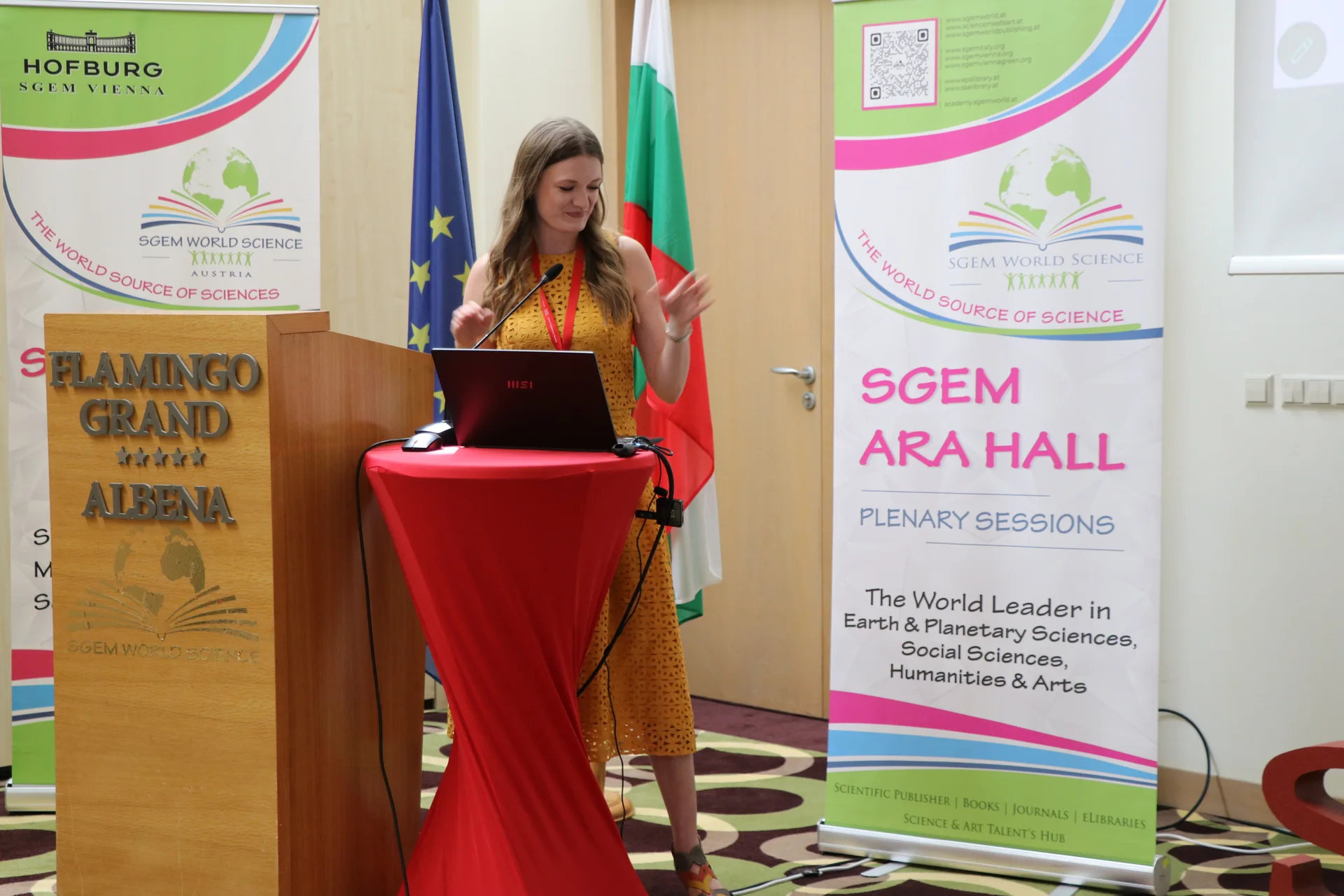
In August 2026, researchers gathered in the elegant setting of Flamingo Grand, Albena, on Bulgaria’s Black Sea coast for the SWS International Scientific Conferences on Social Sciences and on Arts & Humanities. Two conferences shared one academic setting — and, across the scientific sessions of 26–29 August, many ways of asking what shapes our lives, our societies and our culture.
A question about artificial intelligence could lead from law and public administration to education or the performing arts. Research on sustainability met economics and urban life; the study of memory and identity found connections with language, literature and cultural heritage. That movement between disciplines gave the meeting its distinctive character: different methods, different evidence, and a shared interest in understanding the human world.
The programme combined presentations in Albena with online contributions, an interactive workshop and extended scientific sessions in Varna. This review revisits selected threads from those four days — the research, the people behind it and the changes of setting that brought the two conferences into conversation.
The story, day by day
Four days. A wider view of the human world.
Choose a day to follow the conference.
Wednesday · 26 August 2026
From fairness in the classroom to life online
The opening day began with questions close to everyday experience: who protects our rights, and how do institutions earn our trust? Maria Calafus addressed ethics and social responsibility in Romanian universities and students’ right to an objective, impartial assessment. Egidijus Nedzinskas brought a different institutional perspective through the role of specialists in Lithuanian criminal procedure. Together, these contributions placed professional judgement and responsibility at the centre of the opening sessions.
The afternoon widened the lens. Eva Torok examined originality and copyright protection for photographs, while Zsolt Hajnal considered the European internal market and the vulnerability of supposedly rational consumers. The connection was striking: a classroom assessment, a photograph and a purchasing decision all raise questions about the individual’s position within larger systems. These were natural starting points for questions that reached across the legal and social-science sessions.
Online contributions extended that exchange to urban memory, algorithmic discrimination and the changing language of digital life. Federico Valente and Francesco Spilabotte’s work on the shift from ‘real time’ to ‘feed time’ brought linguistics into the same conversation as digital society. Later, the Welcome Drink offered a more relaxed setting to meet the researchers behind the presentations and continue the day’s introductions.
Thursday · 27 August 2026
From contemporary society to the cultural life of Varna
The second morning moved between environmental value, public debt and the human dimensions of digital change. Blanka Giertliova considered recreational ecosystem services in environmental reporting; Laszlo Torok explored the dynamics of euro-area public debt. Adina Candrea connected heritage interpretation and ecotourism with education for innovation and sustainability. These different subjects shared a practical concern: how research can inform decisions beyond the conference room.
Karina Burgdorff Jensen then placed the human relationship at the heart of AI-supported business-to-business sales. Claudiu Coman’s contributions on doomscrolling and digital identity turned attention to the ways online environments influence behaviour. Across the morning, technology emerged as a social question as much as a technical one — a thread that connected management, sociology and the wider humanities programme.
In the afternoon, the conference changed setting. The joint extended scientific programme took participants to the Archaeological Museum of Varna and the Varna City Art Gallery ‘Boris Georgiev’. History, material culture and visual expression could now be approached in the presence of the objects and artworks themselves. Moving from a professional museum lecture to the gallery’s artistic setting gave the interdisciplinary idea a tangible form: social sciences and humanities sharing more than a timetable, with cultural heritage becoming a setting for academic exchange.
Friday · 28 August 2026
A day for connecting research with the world beyond it
Friday opened with the digital and green transitions. Costel Plescan brought together AI, photovoltaic energy, youth engagement and the skills needed for change, then considered AI in public administration. Other contributions explored work, wellbeing and multicultural belonging. The programme kept returning to a common issue: technological change becomes meaningful through the people and institutions that live with it.
At 11:30, the interactive workshop ‘From Ideas to Impact: Entrepreneurship, Critical Thinking, Sales and AI’ shifted the focus towards application. Led by Emil Velinov, Karina Jensen and Anca Tamaș, it connected research insight with questions of value, partners, funding and communication. Its small-group prompting exercises and critical review of AI-generated suggestions offered a practical way to work on those questions: what makes an idea useful, who might need it, and how can its significance be explained without losing scientific substance?
The afternoon brought the discussion back to lived experience. Ecaterina Coman examined TikTok’s influence on school students; Andreea-Claudia Mardache explored recruitment in the digital era. Contributions on school leadership, rural revitalisation, medical simulation and attitudes towards refugees added further perspectives. Research on education, health, media and society could be heard side by side, inviting participants to look for connections beyond the boundaries of their own session.
Saturday · 29 August 2026
Closing with culture, creativity and the meaning of heritage
The final scientific morning brought the arts and humanities into sharper focus. After Akos Lakatos’s contribution on thermal insulation and energy-related building sustainability, Paula-Andreea Onofrei turned attention to the prayer of the heart in literature and Christian Orthodoxy, and to the complex personality of Nicolae Steinhardt. The change of subject was also a reminder of the meeting’s range: material conditions and inner life belonged within the same broad conversation about human experience.
Mykhailo Kharchenko connected contemporary performance with two urgent contexts: AI-assisted directing and Ukrainian musical events during the full-scale war. Andrea Bringas’s work on the co-construction of heritage values then returned to a question that had followed the conference from Albena to Varna: how do people give meaning to culture, and whose perspectives help shape that meaning?
The closing session at midday brought the four-day scientific programme to an end. Looking back, its continuity lay in the connections between apparently distant subjects — rights and technology, learning and identity, economic choices and cultural memory. The value of gathering in one place was the opportunity to hear those connections, question them and carry a new perspective back into one’s own research.
Beyond the presentation
A setting that became part of the exchange
The pre-conference field trip was part of that experience, offering a shared start before the scientific sessions in Albena. It created time to meet fellow participants outside the formal programme and an opportunity to begin conversations across disciplines — a natural introduction to the exchange that followed in the conference halls.
Albena offered more than a backdrop. The coastal setting and the Welcome Drink created opportunities for introductions outside the formal speaking slots, while the extended sessions in Varna brought scholarly interests into direct contact with the city’s museums, art and cultural life.
The museum and gallery programme was part of the joint scientific experience. For researchers working on society, identity or heritage, a change of setting could open a different way into a familiar subject — and a new conversation with a colleague approaching it from another discipline.
What made being there valuable
The conversation after the presentation
A paper can introduce an argument; a meeting allows someone else to question it, compare it with another case and ask how it might travel across disciplines. The combination of presentations, workshop activity and shared visits created space for that fuller exchange.
For a researcher, the opportunity was personal as well as intellectual: to meet someone working on a related problem, discover an unfamiliar method and begin a conversation that could continue afterwards. That is what gave these four days a significance beyond the sequence of talks.